Taiwan Sakura (9911 TT): From Hardware to Household LTV: Unlocking Sakura’s 7mn-Customer Base
Company Overview
Founded in 1978, Sakura (9911.TW) is Taiwan’s leading kitchen and bath appliances supplier, with a >50% market share across its three core categories (water heaters, range hoods, and gas stoves). Leveraging its strong brand equity, Sakura has evolved from a manufacturer into a home living integration platform, expanding into integrated kitchens, home interiors, and overseas markets. Backed by 3,500+ retail touchpoints and a robust service ecosystem, this model has driven a decade of steady growth, with FY25 revenue exceeding NT$10bn and record-high EPS. Sakura has maintained ROE above 20%, a 70–80% payout ratio, and a net-cash balance sheet.
Key Points
Valuation Understates the Resilience of Replacement Demand: The market discounts Sakura as a mature hardware stock, overlooking that its growth is less dependent on new-housing cycles. Kitchen and bath appliances are non-discretionary; aging or malfunctioning units require immediate repair or replacement. With ~70% of revenue driven by this resilient demand, Sakura has a relatively predictable revenue base. Leveraging its brand leadership, 3,500+ touchpoints, and 7mn customer database, the company captures recurring revenue across the product lifecycle—sustaining long-term cash flow while driving product upgrades, consumable adoption, and repeat sales across its installed base.
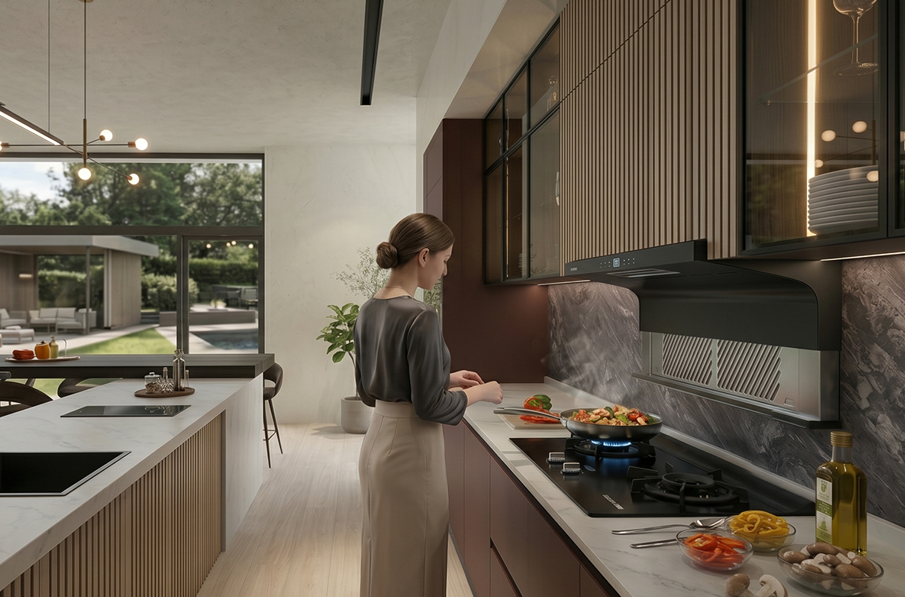
Product Extension to Full-Home Solutions Expands Revenue per Household: With Taiwan’s kitchen appliance market maturing at 1.5–1.6mn units annually, Sakura’s growth shifts from volume to value creation. The company is scaling from standalone appliances to AI Kitchens, water purifiers, integrated kitchens, and full-home design. AI Kitchens boost ASP through premium upgrades and package sales, while water purifiers generate high-margin recurring revenue. Integrated kitchens and space planning further scale ticket size. Transitioning toward unified suites, consumables, and home space solutions, Sakura is well-positioned to steadily raise value per household in a stable market.
Developer Channel Supports Mid-Term Growth and Expands Future Replacement Base: The 2B developer channel serves as a key customer-acquisition channel for Sakura to acquire new households. Amid low penetration of decorated new homes in Taiwan, Sakura is among the few players with end-to-end capabilities—spanning branding, design, supply chain, installation, and after-sales service—to capture scalable renovation demand. Entering homes at delivery drives mid-term new-sales growth more efficiently than retail. As appliances age, these new cohorts will transition into repeat maintenance, consumable, and upgrade demands, supporting an “acquisition → installed base → replacement” cycle.
Valuation Re-rating Toward a Lifetime Value Platform: Sakura’s current valuation reflects a mature hardware stock, with limited recognition of its high-market-share installed base, replacement cycles, new category penetration, long-tail consumable revenue, 2B customer onboarding, and home integration potential. We project an 11.4% revenue CAGR (2025–2028E), supporting our forecast for revenue to reach NT$15bn+ by 2030E. Our scenario analysis yields a base-case implied value of NT$111–127 and a bull-case of NT$135–151. As smart kitchens, water purification, and 2B interior revenue scale, we believe the valuation framework could gradually shift to a household Lifetime Value (LTV) platform—anchored by recurring replacement cash flows, installed-base monetization, and home-space expansion capabilities.